merrygoround
18 photos and 1 illustration tagged merrygoround, from 10 members of Flickr Commons.
When were these photos & illustrations taken?
Where were these photos & illustrations tagged?
26% of these photos & illustrations are geotagged.
Related tags
Tags that often appear on the same photos & illustrations:
- carousel
- children
- horses
- carnival
- tents
- fair
- libraryofcongress
- xmlns:dc=httppurlorgdcelements11
- queensland
- wheel
- ferriswheel
- rides
- ride
- fairground
- statelibraryofqueensland
- funfair
- carnivalride
- childrensclothing
- small
- jack
- vermont
- circus
- statefair
- ferris
Members using this tag
- State Library of Queensland
- The Library of Congress
- Mennonite Church USA Archives
- SDASM Archives
- Nasjonalbiblioteket
- National Library of Ireland on The Commons
- Florida Memory
- State Library of New South Wales
- North East Museums
- British Library
Photos & Illustrations
Show photos & illustrations photos (18) illustrations (1)
Photos & Illustrations tagged merrygoround:
Loading photos & illustrations…
Recent uploads
The last upload was August 2025.

Children ride a carousel at the Brisbane Exhibition 1947 from State Library of Queensland uploaded August 2025

Play Time, Hokkaido International School, Japan from Mennonite Church USA Archives uploaded November 2024

Playground Girls Home Jamaica from Mennonite Church USA Archives uploaded October 2023

Children ride a carousel at the Brisbane Exhibition, 1947 from State Library of Queensland uploaded December 2021

Portrait of a small child on a carousel horse (0001-0050) from State Library of Queensland uploaded December 2021
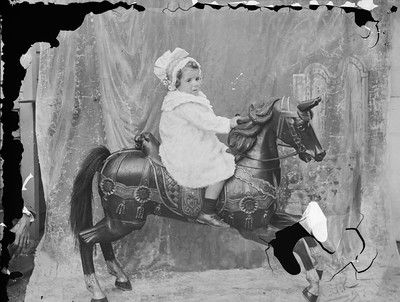
Portrait of a small child on a carousel horse (0001-0051) from State Library of Queensland uploaded December 2021

Merry-go-round in action in Cooktown, ca. 1895 from State Library of Queensland uploaded July 2018

Merry-go-round being assembled at a Cooktown fair, ca. 1895 from State Library of Queensland uploaded July 2018

Strand, Lahinch, Co. Clare from National Library of Ireland on The Commons uploaded January 2018

Child on a merry-go-round at North Florida Fair - Tallahassee from Florida Memory uploaded October 2014

Fornøielsesavdelingen. Russiske hjul from Nasjonalbiblioteket uploaded July 2014

AL_005A_151 from SDASM Archives uploaded September 2013

W. Baxter, Proprietor, Sydney from North East Museums uploaded December 2011


Conversations
Here’s a selection of the conversations happening on these photos & illustrations:
Strand, Lahinch, Co. Clare
- 8 older comments, and then…
- domenico milella said:
- beachcomber australia said:
- National Library of Ireland on The Commons said:
- Carol Maddock said:
- guliolopez said:
Child on a merry-go-round at North Florida Fair - Tallahassee
from Florida Memory
-
Lute Alumni said:
Thank you!
Portrait of a small child on a carousel horse (0001-0051)
-
Vesna Verencevic said:
The earliest types of carousels were most likely created by Arabians. The first carousels were made for adults to ride. Today carousels are made for children to ride. However, the carousel was first recognized as being a carousel in Europe. People most likely made the first carousels in the seventeenth century. However carousels were used in France, to practice a game they enjoyed playing. For this game, horsemen practiced playing a game on which they would ride wooden horses, horses that were carved out of wood. The wooden horses would be rotated by servants pulling at the rotating platform. This would be similar to the playground carousels. Or the horsemen would use real horses to rotate the platform. The carousel emerged as a ride when a toy dealer in France showed wooden horses on a rotating platform moved by human power or horsepower in the beginning of 18th century. Carousels became popular in America between 1880 and 1930. During this time, there were around 5000 carousels built. Michael Dentzel, an American who immigrated from German and lived in Philadelphia, moved the rotary platform of his carousel using steam power or horsepower in 1814. Later, the carousels found in amusement parks had platforms moved by a machine. This concept is still being used today. It was invented in 1898 in America. Railroads were the first companies in America to purchase carousels for their customers' enjoyment. The most popular of the carousel animals always has been and still is the horse. Eighty percent of animals carved for carousels in America are horses. Other animals that have been used on carousels include "Mother Goose" and "Disney" characters. The "romance" side of the carousel animals is the side that faces the audience. On the romance side the animal had extra carvings and decorations. Most of the carousels in Europe and America turn counterclockwise. In Great Britain, carousels turn clockwise. Source: kids.kiddle.co/Carousel