wearing
36 photos and 2 illustrations tagged wearing, from 5 members of Flickr Commons.
When were these photos & illustrations taken?
Where were these photos & illustrations tagged?
65% of these photos & illustrations are geotagged.
Related tags
Tags that often appear on the same photos & illustrations:
- queensland
- statelibraryofqueensland
- slq
- hats
- state
- library
- portrait
- man
- woman
- hat
- corset
- men
- sitting
- australia
- smithsonianinstitution
- children
- photographer
- two
- smoking
- with
- lady
- dress
- four
- beard
Members using this tag
- State Library of Queensland
- Smithsonian Institution
- Museum of Photographic Arts
- Australian National Maritime Museum on The Commons
- North East Museums
Photos & Illustrations
Show photos & illustrations photos (36) illustrations (2)
Photos & Illustrations tagged wearing:
Loading photos & illustrations…
Recent uploads
The last upload was June 2025.

01 J.A. Sinclair and Charlie Boreham from Bundaberg from State Library of Queensland uploaded June 2025

Billy Andrews from the Tweed River Region from State Library of Queensland uploaded June 2025

Hodgson from Eton Vale Station, Darling Downs, ca. 1860s from State Library of Queensland uploaded June 2025

Crowd at the tennis, Birdsville, April 1927 from State Library of Queensland uploaded February 2023

Shearers in an open car, Queensland, 1920-1930 from State Library of Queensland uploaded February 2023

Castles Cordial-Works Bundaberg 1922 from State Library of Queensland uploaded January 2023

Two women seated in front of the stage in a decorated hall in Caboolture from State Library of Queensland uploaded March 2022

Man standing in remains of a building destroyed by fire in Emerald, 1937 from State Library of Queensland uploaded January 2022
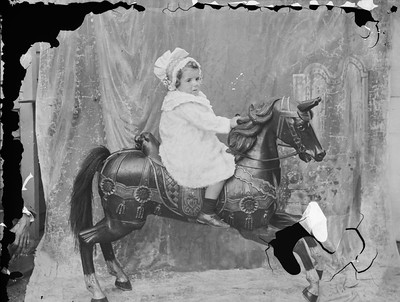
Portrait of a small child on a carousel horse (0001-0051) from State Library of Queensland uploaded December 2021

Charley and Edward Mesur, 1900-1910 from State Library of Queensland uploaded December 2021

On the beach at Palm Island in North Queensland, ca. 1938 from State Library of Queensland uploaded May 2020

Cabinet portrait of Elsie Dixon from State Library of Queensland uploaded May 2020

Young woman modelling a Jenyns corset ca. 1920 from State Library of Queensland uploaded May 2020

Louisa Stewart Archer and Mary Louisa Archer ca. 1885 from State Library of Queensland uploaded May 2020

Studio portrait of a boy and girl wearing costumes in Mareeba Queensland from State Library of Queensland uploaded March 2020
Conversations
Here’s a selection of the conversations happening on these photos & illustrations:
Young woman modelling a Jenyns corset ca. 1920
- Vesna Verencevic said:
- Annette Cadell said:
Feeding the chickens in a Brisbane suburban backyard in New Farm, Brisbane, ca. 1923

-
Vesna Verencevic said:
New Farm is the land of the Turrbal people. The Turrbal people are the traditional owners of most of Brisbane, with their land reaching as far up as North Pine River and as far south as Logan River. New Farm was, shockingly enough, farming land tended to by convicts from the Moreton Bay Penal Settlement. New Farm became Brisbane’s second major farm, established in 1839 to replace the South Brisbane farming area. Therefore, New Farm was once upon a time literally a new farm. The farming area (which would later become New Farm Park) was bordered by two main thoroughfares. The roads were later named Brunswick Street and Merthyr Road. European families settled on sub-divisions around these thoroughfares. While it wasn’t unheard of to find an English, Irish, or Scottish family residing in New Farm, the majority of immigrants were of Italian descent. To this day, Italian culture continues to be a massive influence on the suburb. You’ll find everyone seems to know each other and they’ll drop what they’re doing to have a chat over coffee, cheese, and cured meats. Source: huttonandhutton.com.au/new-farm-a-history/
Portrait of a small child on a carousel horse (0001-0051)
-
Vesna Verencevic said:
The earliest types of carousels were most likely created by Arabians. The first carousels were made for adults to ride. Today carousels are made for children to ride. However, the carousel was first recognized as being a carousel in Europe. People most likely made the first carousels in the seventeenth century. However carousels were used in France, to practice a game they enjoyed playing. For this game, horsemen practiced playing a game on which they would ride wooden horses, horses that were carved out of wood. The wooden horses would be rotated by servants pulling at the rotating platform. This would be similar to the playground carousels. Or the horsemen would use real horses to rotate the platform. The carousel emerged as a ride when a toy dealer in France showed wooden horses on a rotating platform moved by human power or horsepower in the beginning of 18th century. Carousels became popular in America between 1880 and 1930. During this time, there were around 5000 carousels built. Michael Dentzel, an American who immigrated from German and lived in Philadelphia, moved the rotary platform of his carousel using steam power or horsepower in 1814. Later, the carousels found in amusement parks had platforms moved by a machine. This concept is still being used today. It was invented in 1898 in America. Railroads were the first companies in America to purchase carousels for their customers' enjoyment. The most popular of the carousel animals always has been and still is the horse. Eighty percent of animals carved for carousels in America are horses. Other animals that have been used on carousels include "Mother Goose" and "Disney" characters. The "romance" side of the carousel animals is the side that faces the audience. On the romance side the animal had extra carvings and decorations. Most of the carousels in Europe and America turn counterclockwise. In Great Britain, carousels turn clockwise. Source: kids.kiddle.co/Carousel