dress
721 photos and 297 illustrations tagged dress, from 51 members of Flickr Commons.
When were these photos & illustrations taken?
Where were these photos & illustrations tagged?
13% of these photos & illustrations are geotagged.
Related tags
Tags that often appear on the same photos & illustrations:
- woman
- publicdomain
- bldigital
- hat
- sherlocknet:category=organism
- mechanicalcurator
- girl
- vol0
- unusual
- digitalimage
- lady
- medium
- women
- archives
- portrait
- socialhistory
- unitedkingdom
- fashion
- northeastofengland
- blackandwhitephotograph
- wall
- xmlns:dc=httppurlorgdcelements11
- pubplacelondon
- grain
Members using this tag
- British Library
- North East Museums
- The Library of Congress
- State Library of Queensland
- Smithsonian Institution
- George Eastman Museum
- Costică Acsinte
- State Library of New South Wales
- Fylkesarkivet i Vestland
- Powerhouse Museum
- Archives of the Law Society of Ontario
- East Riding Archives
Photos & Illustrations
Show photos & illustrations photos (721) illustrations (297)
A selection of photos & illustrations tagged dress:
Loading photos & illustrations…
Recent uploads
The last upload was 3 September.

Lady Leonie Leslie looking lovesome and lovely from National Library of Ireland on The Commons uploaded 3 September

Young girl and boy posing with a lamb from State Library of Queensland uploaded September 2025

Kwong Sue Duk with his three wives and fourteen children, Cairns, 1904 from State Library of Queensland uploaded September 2025

The "Roaring Twenties" from National Library of Ireland on The Commons uploaded July 2025

Betty Percival seated on a park bench from State Library of Queensland uploaded February 2025

Homemaker Services from National Library of Medicine uploaded March 2024

Homemaker Services from National Library of Medicine uploaded March 2024
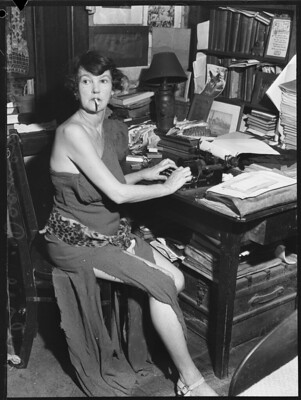
Dulcie Deamer, Kings Cross, Sydney, 1950 from State Library of New South Wales uploaded February 2024

Carte-de-viste portrait of an unidentified Chinese man, 1880 from State Library of Queensland uploaded January 2024

Photograph of Shum-Chick Tong from State Library of Queensland uploaded January 2024

Parade of Australian soldiers along Queen Street Brisbane 1945 from State Library of Queensland uploaded September 2023

Crowd of women passing in front of a tram in Queen Street following a military parade 1945 from State Library of Queensland uploaded September 2023


Conversations
Here’s a selection of the conversations happening on these photos & illustrations:
Young woman posing with her bike next to a rain water tank , ca. 1925

- Vesna Verencevic said:
Olga Petrova (LOC)

-
Seuss. said:
A version of this photo appears in the September 18 New Britain Herald with the caption
Olga Petrova. actress, is back In New York after a trip abroad. She brought with her a pet monkey, little dreaming that any photographers would want to take its picture
This is why you can't trust the press: it's not a monkey, it's a ring tailed lemur. Beyond that, Olga Petrova was the stage name of British/American actress/writer Muriel Harding (1884-1977) -
Jon (LOC P&P) said:
Thanks for the newspaper link Seuss., I'll be sure we add a note about the lemur.
Gladys Moncrieff performing on stage, Queensland

-
Vesna Verencevic said:
Moncrieff made highly successful gramophone recordings in Australia for the Columbia Graphophone Co. between 12 October 1928 and 4 June 1935. She was a regular visitor to the company studios at Homebush, Sydney, making eighty-four titles that were released on either Regal, Regal-Zonophone or Columbia labels as ten-inch discs. These well-known musical comedy favorites sold far better than similar material by many famous overseas artists. Most of these recordings were reissued by EMI Records Australia and enjoyed healthy sales. Gladys Moncrieff had a powerful, wide-ranging, rich soprano voice, and excellent diction. Undemonstrative in behavior, she approached her singing like a craft, meticulously and unostentatiously. She dressed simply and did not shun menial tasks. Her large, informal parties were memorable for her superb cooking, especially for her pie with seventy dozen oysters. Perhaps it was also her sense of fun and tender-heartedness that attracted her large following of 'gallery girls', women who queued for standing room and followed her movements with flowers and mail. She became a legend in Australia in her lifetime, respected by her professional colleagues, and loved by her devoted public. Her autobiography, My Life of Song (Adelaide, 1971), was ghosted by Lillian Palmer. Source: adb.anu.edu.au/biography/moncrieff-gladys-lillian-7621