maryjaneshoes
13 photos tagged maryjaneshoes, from 3 members of Flickr Commons.
When were these photos taken?
Where were these photos tagged?
61% of these photos are geotagged.
Related tags
Tags that often appear on the same photos:
- statelibraryofqueensland
- slq
- queensland
- australia
- 1920s
- indoors
- stockings
- style
- flapper
- socks
- cloche
- 1927
- waistcoat
- gloves
- bride
- woman
- smile
- smiling
- scarf
- children
- suit
- girls
- hats
- fancydress
Members using this tag
Photos
Photos tagged maryjaneshoes:
Loading photos…
Recent uploads
The last upload was September 2025.

Children riding a horse to school, Glass House Mountains from State Library of Queensland uploaded September 2025

Stella Doblo with a camera, Gladstone, 1910-1920 from State Library of Queensland uploaded September 2025

ca_20141006_000 from Costică Acsinte uploaded October 2014

Wedding of Drew and Marie Drynan at St. Stephens Cathedral, Brisbane, 14 August 1929 from State Library of Queensland uploaded September 2012

Wedding of Nancy and Clarrie Wieting, Brisbane, ca. 1925 from State Library of Queensland uploaded September 2012

E. Power on her wedding day in August, 1927 from State Library of Queensland uploaded September 2012

Miss Katie Fitzgerald from State Library of Queensland uploaded September 2012

Golfers at the links in Atherton ca 1925 from State Library of Queensland uploaded September 2012
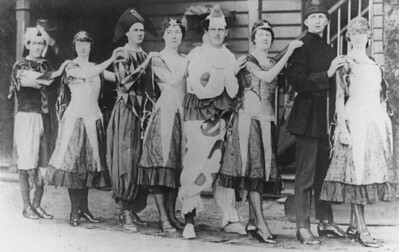
Costume parade in Charleville, Queensland, ca. 1920 from State Library of Queensland uploaded December 2011

Mother and child at the show, 1938 from State Library of Queensland uploaded May 2010

Jew[ish] New Year - praying on Brooklyn Bridge [i.e. Williamsburg Bridge] (LOC) from The Library of Congress uploaded January 2008


Conversations
Here’s a selection of the conversations happening on these photos:
Children riding a horse to school, Glass House Mountains
- 27 older comments, and then…
- Miss Laid Plot said:
- angusmcnitt said:
- invincible dinner said:
- jankoraseta said:
- Dario Z said:
Golfers at the links in Atherton ca 1925
-
Vesna Verencevic said:
While the wearing of hats is mostly reserved for cold weather or a royal wedding nowadays, there was once a time when a woman wouldn’t dare leave the house without one. Hats have a long, elaborate sartorial history, especially when it comes to women’s fashion. One hat style in particular from the “heyday” of hat-wearing is even still occasionally worn today- the cloche. While it is a defining fashion icon of the 1920s, this stretch of time is only the height of its popularity. Its history stretches back to the turn of the century when it was first created- 1908 to be exact. The design was invented by French milliner Caroline Reboux: a small bell-shaped hat that was easy to form, and simple enough that it could be embellished and styled in a number of ways. The accessory was aptly named, “cloche,” the French word for bell. The 1920s version of the cloche is iconic. It featured an even more snug fit than its predecessors and was worn so low over the eyebrows that women walked with their chins up and eyes cast down. Fortunately, walking with this kind of poise only added to the allure of the look, as women felt it created an air of confidence and independence in the wearer. During this decade, no woman ever left the house without a chic cloche to top off her look. As cloche styles began to grow and change, embellishment began to feature more heavily in the design. Art deco was a heavy influence in all aspects of 1920s fashion, and hats were no exception. The art style impacted the brim and seam styles of cloche hats, as well as what decorated it. Applique, beads, brooches, or feathers were popular and helped to dress up hate for more formal occasions. Some versions were made from laces and silks to add glamour, and could be paired with a fancy evening ensemble. Source: startupfashion.com/fashion-archives-history-cloche-hat/
Their royal highnesses the Duke and Duchess of York enjoy a morning at Mt Coot-tha, April 1927
-
Aussie~mobs said:
Almost certainly taken by Henry William Mobsby, as I have seen another almost identical shot, but the ladies behind are looking towards the camera. The photo is at the Fryer Library, in the Mobsby Collection - UQFL181 Box 1 Folder 13. You can see it here on page 128: espace.library.uq.edu.au/data/UQ_418596/HenryWMobsby_biog...
-
State Library of Queensland said:
Thank you Kaye. That is useful information. I will pass it on to our Description team.
-
Chief Swim said:
www.flickr.com/photos/jacksonstreet/50120958711/in/datepo...
-
Vesna Verencevic said:
A small viewing gazebo with an ogee-shaped roof, stone base, open balustrades, pergola entrance, and housing a telescope was constructed c.1918. In 1927 the Duke and Duchess of York were photographed visiting Mount Coot-tha standing at the direction finder.[1] Source: www.wikiwand.com/en/Mount_Coot-tha_Lookout
-
Vesna Verencevic said:
" When Hugh Deviney became Park Ranger, after World War I, he and his sisters lived at the kiosk. The four Diveney sisters ran a successful catering business, selling home-smoked hams and home-baked cakes and pastries. For many local people, a special outing was the walk-up the mountain to the kiosk for an afternoon tea with sandwiches and scones. The Divenys were hosts to many VIPs, including the Duke and Dutches of York, who were later to be crowned King George VI and Queens Elizabeth. Two war veterans on horseback met them at the Reserve's gates and escorted them, one on either side of the car, to the kiosk, where Bille Deviney presented them with a bouquet of gum tips and Texas grass. The royal couple inspected the viewing dial and took tea in the kiosk. Brisbane's Mayor William Jolly took every opportunity to promote Brisbane and its tourist attractions. In 1927 he called on every citizen to help promote the city because every sector of the community benefitted from tourist expenditure." Source: History of Mount Coot-tha By Janet Spillman, 2013