uniforms
1,834 photos and 23 illustrations tagged uniforms, from 46 members of Flickr Commons.
When were these photos & illustrations taken?
Where were these photos & illustrations tagged?
28% of these photos & illustrations are geotagged.
Related tags
Tags that often appear on the same photos & illustrations:
- soldiers
- unitedstates
- portraits
- military
- inspection
- 1910s
- men
- florida
- cornelluniversitylibrary
- xmlns:dc=httppurlorgdcelements11
- queensland
- culidentifier:lunafield=idnumber
- libraryofcongress
- firstworldwar
- worldwari
- politics
- generals
- sports
- promotionalmaterials
- women
- statelibraryandarchivesofflorida
- war
- hospitalcorps
- statelibraryofqueensland
Members using this tag
- Navy Medicine
- Community Archives of Belleville & Hastings County
- State Library of Queensland
- Cornell University Library
- The Library of Congress
- Florida Memory
- National Library of Ireland on The Commons
- Deseronto Archives
- SMU Libraries Digital Collections
- National Library of Scotland
- Miami University Libraries - Digital Collections
- Museums of History NSW - State Archives Collection
Photos & Illustrations
Show photos & illustrations photos (1,834) illustrations (23)
A selection of photos & illustrations tagged uniforms:
Loading photos & illustrations…
Recent uploads
The last upload was 4 days ago.

NMRTC San Diego Sailors Conduct Uniform Inspection 261002-N-MJ645-1057 from Navy Medicine uploaded 4 days ago
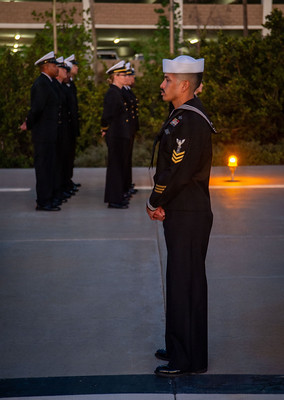
NMRTC San Diego Sailors Conduct Uniform Inspection 261002-N-MJ645-1053 from Navy Medicine uploaded 4 days ago

NMRTC San Diego Sailors Conduct Uniform Inspection 261002-N-MJ645-1072 from Navy Medicine uploaded 4 days ago

NMRTC San Diego Sailors Conduct Uniform Inspection 261002-N-MJ645-1058 from Navy Medicine uploaded 4 days ago

NMRTC San Diego Sailors Conduct Uniform Inspection 261002-N-MJ645-1076 from Navy Medicine uploaded 4 days ago

NMRTC San Diego Sailors Conduct Uniform Inspection 261002-N-MJ645-1085 from Navy Medicine uploaded 4 days ago

NMRTC San Diego Sailors Conduct Uniform Inspection 261002-N-MJ645-1093 from Navy Medicine uploaded 4 days ago

NMRTC San Diego Sailors Conduct Uniform Inspection 261002-N-MJ645-1091 from Navy Medicine uploaded 4 days ago

NMRTC San Diego Sailors Conduct Uniform Inspection 261002-N-XH733-1033 from Navy Medicine uploaded 4 days ago

NMRTC San Diego Sailors Conduct Uniform Inspection 261002-N-XH733-1020 from Navy Medicine uploaded 4 days ago

NMRTC San Diego Sailors Conduct Uniform Inspection 261002-N-XH733-1058 from Navy Medicine uploaded 4 days ago

NMRTC San Diego Sailors Conduct Uniform Inspection 261002-N-XH733-1049 from Navy Medicine uploaded 4 days ago

NMRTC San Diego Sailors Conduct Uniform Inspection 261002-N-XH733-1045 from Navy Medicine uploaded 4 days ago

NMRTC San Diego Sailors Conduct Uniform Inspection 261002-N-XH733-1093 from Navy Medicine uploaded 4 days ago
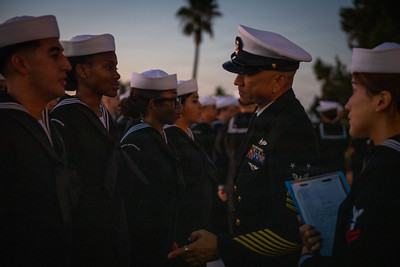
NMRTC San Diego Sailors Conduct Uniform Inspection 261002-N-XH733-1081 from Navy Medicine uploaded 4 days ago
Conversations
Here’s a selection of the conversations happening on these photos & illustrations:
Dev in shades

- 35 older comments, and then…
- Suck Diesel said:
- O Mac said:
- Suck Diesel said:
- Niall McAuley said:
- Niall McAuley said:
Australian women war workers, Brisbane, October 1942

-
Vesna Verencevic said:
The first 27 female conductors started work on the trams and buses in October 1942. By June 1943 there 619 employed in Sydney and 97 in Newcastle. TRAINING WOMEN FOR TRAM WORK Assistant conductresses who will soon appear on Melbourne trams and buses will commence practical training at Hawthorn depot next week. They will be instructed in the arts of boarding movlng trams, maintaining balance in swaying carriages, punching of tickets and necessary clerical work. All assistant conductresses will be wives of tramway men who are at present overseas. Should the experiment succeed the board may decide to greatly expand the role of women assistants to meet staffing difficulties. OPINION POLL Majority In Favour Of Women Conductors Employment of women conductors on trams and buses is strongly approved throughout Australia, according to a Gallup Poll taken in June. War-time employment of women on jobs ordinarily done by men is one of the questions of the hour. In its first poll, taken last September, Australian Public Opinion Polls (The Gallup Method) found that two out of three people with opinions on the subject favoured equal pay for men and women doing the same work. Source: busaustralia.com/forum/viewtopic.php?t=52592
WAAAF personnel standing outside Orderly Room 3 E.D. at Sandgate RAAF base in 1943

-
Vesna Verencevic said:
The Women's Auxiliary Australian Air Force (WAAAF) was formed in March 1941 after considerable lobbying by women keen to serve and by the Chief of the Air Staff who wanted to release male personnel serving in Australia for service overseas. The WAAAF was the first and largest of the World War II Australian Women's Services. It was disbanded in December 1947. During the early years of World War II the necessity to make use of women in many new avenues of employment became apparent. Despite resistance from some members of the War Cabinet, bureaucrats and the Service, in February 1941 the Royal Australian Air Force (RAAF) received approval to create the Women's Auxiliary Australian Air Force (WAAAF). Wireless telegraphists were urgently needed to assist in meeting a temporary deficiency of male wireless telegraphists. Airwomen were accepted into 73 different musterings (trades), including highly skilled technical employment on aircraft. In addition to telegraphists, women became armament workers, electricians, fitters, flight mechanics, fabricworkers, instrument makers and meteorological assistants, besides using skills in many clerical, medical, transport, catering, equipment, signals and radar fields of employment. Over 700 women held commissioned rank and like airwomen, worked in a great variety of administrative, technical and professional tasks. A number commanded units in operations rooms, at General Douglas MacArthur's Headquarters in Brisbane dealing with intelligence matters, at Operational Units, in RAAF Hospitals, Aircraft Depots, Radar Stations, RAAF Bases – wherever they were needed, they served. Airwomen were paid two-thirds of RAAF male pay for equivalent positions. The officers were paid a good deal less than male officers of equal rank. The value of the work and the skills of the WAAAF during a period when thousands of men needed to be released for operational duty overseas and Australia itself was at risk, encouraged the formation of the Women's Royal Australian Air Force (WRAAF) in 1951. This branch of the RAAF was disbanded in 1977 when its members became an integral part of the RAAF. Source: www.womenaustralia.info/biogs/AWE0400b.htm