transport
579 photos and 12 illustrations tagged transport, from 34 members of Flickr Commons.
When were these photos & illustrations taken?
Where were these photos & illustrations tagged?
36% of these photos & illustrations are geotagged.
Related tags
Tags that often appear on the same photos & illustrations:
- queensland
- thenationalarchivesuk
- digitalimage
- unusual
- blackandwhitephotograph
- unitedkingdom
- archives
- northeastofengland
- london
- industry
- tube
- londonunderground
- forties
- aviation
- construction
- industrialheritage
- tna:PieceReference=zspc11p256
- tna:IAID=c3675544
- tna:SeriesReference=zspc11
- tna:DepartmentReference=zspc
- transportation
- structure
- aircraft
- old
Members using this tag
- State Library of Queensland
- The National Archives UK
- North East Museums
- SDASM Archives
- East Riding Archives
- The Library of Congress
- Royal Australian Historical Society
- State Library of New South Wales
- Navy Medicine
- Powerhouse Museum
- British Library
- Public Record Office of Northern Ireland
Photos & Illustrations
Show photos & illustrations photos (579) illustrations (12)
A selection of photos & illustrations tagged transport:
Loading photos & illustrations…
Recent uploads
The last upload was 5 May.

La Perouse tram departing from the city, Sydney, 1949 from State Library of New South Wales uploaded March 2026

On board of the Hendrick Hudson from Liberas uploaded November 2025

Horsedrawn hearse meeting a train Brisbane 1890s from State Library of Queensland uploaded October 2025
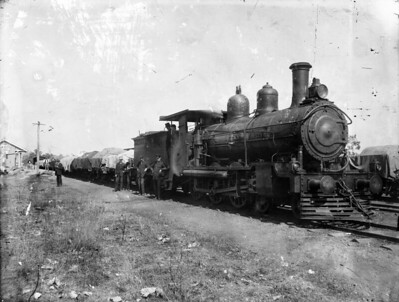
Steam locomotive at an unidentified station from State Library of Queensland uploaded August 2024

First train to cross the bridge into Aramac, 1913 from State Library of Queensland uploaded August 2024

Steam train travelling from Quilpie to Charleville from State Library of Queensland uploaded August 2024

Petrol bowsers, Sydney, 1923-35 from State Library of New South Wales uploaded August 2024

Sydney tram, City of Sydney series, 20 June 19440 from State Library of New South Wales uploaded May 2024

NIDDK Symposium on Lipid Transport & Regulation from National Library of Medicine uploaded April 2024

Anthony Horderns delivery cart, during mid-yearly sale, c. 1912 from State Library of New South Wales uploaded March 2024

VH-UXB, a Dragonfly belonging to Qantas Empire Airways Ltd from State Library of Queensland uploaded January 2024

VH-UZF, a Dragon biplane, on the runway from State Library of Queensland uploaded January 2024


Conversations
Here’s a selection of the conversations happening on these photos & illustrations:
Q.A.T.B ambulance at Bundaberg, Queensland, ca. 1928

- Vesna Verencevic said:
Queensland Ambulance Transport Brigade Hospital in Ipswich, ca. 1937

-
Vesna Verencevic said:
Ambulance services commenced in Ipswich on 4 November 1901, when the Brisbane Centre Committee opened a Sub-Centre there. Deputy Superintendent W.C. Tomkins was placed in charge and he was assisted by Bearer W. Armstrong and seven Honorary Bearers. The weekly wages paid to Officers Tomkins and Armstrong were £2,10s and £1,16s respectively. The Ambulance premises were situated in Down Street and the plant consisted of two Ashford litters (one kindly lent by the Ipswich Hospital Committee) and one collapsible stretcher. In 1902 a horse and sulky were added to the plant. As a consequence of increased demands made upon the Brigade, premises that had met the requirements of the staff in the past were now considered to be too small. In 1910 the Committee purchased new premises at the corner of Down and Flint Streets at a very satisfactory price. The premises were renovated and enlarged to make a comfortable and convenient Centre. The new premises were further renovated in 1911 and a plant room measuring 40 feet long by 24 feet wide was added. In that year the Committee purchased a four-wheeled wagon fitted with rubber tires for country calls and attending accidents at the various local mines. In expounding upon the value of this wagon the Chairperson in his annual report stated, ‘it is fitted with a hood, roller blinds at the sides (which can be drawn during wet weather), thoroughly ventilated, poles and shafts for one or two horses, is capable of carrying two patients on stretchers, or seven persons in sitting positions on movable seats’. In 1927 the Ipswich Committee decided to close this SubCentre and it was confident that a better service could be given from Ipswich seeing that the roads were very good. The Sub-Centre was re-opened in 1969 as an Ambulance Station and new premises were erected. Source: www.ambulance.qld.gov.au/docs/history/Ipswich.pdf
Ambulance Offices in Townsville, ca. 1906

-
Vesna Verencevic said:
Ambulance operations were conducted from a small shop in Flinders Street opposite the Palace Hotel. These premises were leased for a term of six months. Superintendent King moved into the building on 4 January 1901. One of the honorary members was put on paid duty for a period of eleven days at six shillings per day to assist. Being unable to procure locally an assistant holding a first aid certificate, it was decided that the Brisbane Centre be requested to send up a qualified officer for appointment to the permanent staff. Honorary Bearer T.W. McIntyre proceeded to Townsville on the ‘S.S. Peregrine’ on 5 January 1901. He was to meet his own expenses and commence duty in Townsville at a salary of eight shillings per day. In July 1901, the Committee purchased a property suitable for Brigade requirements at the corner of Sturt and Stanley Streets for the sum of £1,250 and a further £100 was expended in building a plant room and stable. By 1904, the work had increased to such an extent as to make more room absolutely necessary to enable the Brigade to function efficiently. On 12 July of that year, the Committee resolved to build a Centre that would meet the requirements of the town for Ambulance work for many years. Tenders were invited for the erection of a new brick Centre building on the site of the existing quarters. The successful tenderer was Mr S.A. Anderson, the contract price being £2,059. The foundation stone was laid on 28 September by Mr J. Johnson, the first life member of the Brigade in Townsville, in the presence of 100 people. Source: www.ambulance.qld.gov.au/docs/history/Townsville.pdf