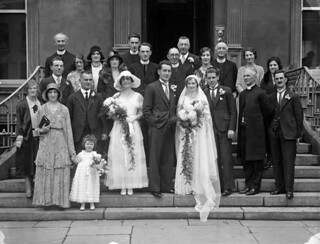
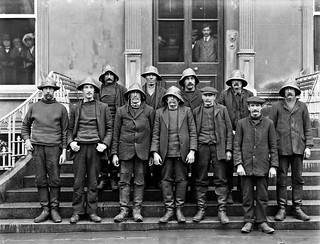
steps
255 photos and 16 illustrations tagged steps, from 40 members of Flickr Commons.
When were these photos & illustrations taken?
Where were these photos & illustrations tagged?
38% of these photos & illustrations are geotagged.
Related tags
Tags that often appear on the same photos & illustrations:
- xmlns:dc=httppurlorgdcelements11
- libraryofcongress
- cornelluniversitylibrary
- culidentifier:lunafield=accessionnumber
- stairs
- woman
- nationallibraryofireland
- blackandwhitephotograph
- hat
- outdoors
- women
- unitedkingdom
- standing
- entrances
- archives
- hats
- unusual
- northeastofengland
- digitalimage
- vintage
- children
- publicdomain
- industry
- grain
Members using this tag
- The Library of Congress
- Cornell University Library
- National Library of Ireland on The Commons
- North East Museums
- British Library
- State Library of Queensland
- Smithsonian Institution
- OSU Special Collections & Archives : Commons
- Bibliothèque de Toulouse
- National Library of Scotland
- Florida Memory
- U.S. National Archives
Photos & Illustrations
Show photos & illustrations photos (255) illustrations (16)
A selection of photos & illustrations tagged steps:
Loading photos & illustrations…
Recent uploads
The last upload was November 2025.

Tall hats and tall columns at Bellamont Forest from National Library of Ireland on The Commons uploaded November 2025

Rocking it up in Staigue from National Library of Ireland on The Commons uploaded June 2024

Nurses Sitting On Steps with A Dog from National Library of Medicine uploaded May 2024

Visiting Nurse Association, New Brunswick, New Jersey from National Library of Medicine uploaded December 2023

Unidentified school group, 1890-1900 from State Library of Queensland uploaded January 2022

Lines, lines, lines, Lion lying and more lines from National Library of Ireland on The Commons uploaded September 2021

Pullman sleeping car in the railway yards from State Library of Queensland uploaded February 2021

A bevy of beauties from National Library of Ireland on The Commons uploaded October 2020

Feeding animals from State Library of Queensland uploaded October 2020

Cheaper by the dozen? from National Library of Ireland on The Commons uploaded September 2020

On the rocks at Church Bay, Weavers Point. Crosshaven. from National Library of Ireland on The Commons uploaded December 2019

CH 12-1a-19 from Community Archives of Belleville & Hastings County uploaded November 2019

Cannon in front of them from National Library of Ireland on The Commons uploaded June 2019

Boys will be boys. from National Library of Ireland on The Commons uploaded May 2019

Conversations
Here’s a selection of the conversations happening on these photos & illustrations:
Rocking it up in Staigue
- 7 older comments, and then…
- Suck Diesel said:
- beachcomber australia said:
- beachcomber australia said:
- beachcomber australia said:
- Suck Diesel said:
A bevy of beauties
- 26 older comments, and then…
-
derangedlemur said:
In Limerick: www.census.nationalarchives.ie/pages/1911/Limerick/Limeri...
-
derangedlemur said:
(It's a sort of open invitation to Beachy, isn't it?)
-
derangedlemur said:
Maybe from the orphanage? bit.ly/31fZswv
-
beachcomber australia said:
20 June 1924 was a Friday . . . (And I have writer's block)
-
derangedlemur said:
Begas, Henri. Organist of St. Saviour’s ... c1881 A handy enough commute
Fancy hats and Roman Collars

- 39 older comments, and then…
-
beachcomber australia said:
Eek! Where has Maud Gonne gone ?
-
National Library of Ireland on The Commons said:
beachcomber australia OMG - We have had a very technical problem today - Poor Maud is GONE, deleted in error due to a glitch in our systems. As you all know deleted on Flicker means deleted. Our plan is to post her again next week and see if we can recreate the excellent detective work from yesterday. If you have a copy of the comments in your history or anywhere on your computer, please do send them on to us. Mary
-
John Spooner said:
M Cassin is mentioned in the Waterford Standard Saturday 24 June 1933 as presiding over a meeting of the Corporation Housing Committee in his capacity as Mayor. He was a councillor as early as 1907 (elected to the Street Committee and the Public Health Committee, and was the councils's representative on the Harbour Board ).
-
National Library of Ireland on The Commons said:
Some Good News - we did manage to find the following comments from yesterday. sam2centsPRO said: Carol Maddock J. V. Robinson must have been a pretty successful photographer in the first place to afford such a device, and very proficient at the scientific arts involved to have designed such a beast. Someone worth knowing way more about. As for Maud Gonne, I had no idea she was so tall, but I see in group photos she towers over other women. Her daughter, the one Yeats was interested in, was very ... BeachcomberAustralia added tags: feather, boa philfluther said: The Hannah Arendt of WW1, "an inconceivable madness". John Spooner said: Sam Here is J V Robinson's obituary in the Irish Times on Monday 21 October 1901 . 10 hours ago sam2centsPRO said: John Spooner Thanks John! I like the line 'in this age of universal electric lighting'. 7 hours ago You said: Thanks Sharon Corbet, Carol Maddock, John Spooner, beachcomber australia, Sam, all. I've mapped this one to the suggested Paris studio address. And, to avoid suggestions of time travel, updated the date to c.1896 :) I've added a short note on the inscription (and its dedicator and dedicatee) to the text. Much appreciated as usual! 7 hours ago oaktree_brian_1976 said: Miss Gonne belongs to an English and Protestant family; it was because she owned land in Ireland that she had the opportunity to witness the painful spectacle of Irish misery and resolved to relieve it. "I gave my life to Ireland, she tells us, until the home ride is stolen. But I did not give up the religion of my fathers. Miss Maud, tall and slender, with a frail appearance, conceals a virile ... 7 hours ago oaktree_brian_1976 said: more photos, 1892 gallica.bnf.fr/ark:/12148/btv1b8596905t/f23.i tem 6 hours ago oaktree_brian_1976 said: Maud Gonne gave lectures. In a monotonous and tireless voice, taking from her aquamarine eyes the sky to witness, she narrated the misery of the peasants of her country, the atrocities of landlords, and dedicated to the wrath of Hell the Protestants of Ulster she called "these abominable Orangist hypocrites". Le Cri de Paris / dir. P. Dollfus 1918-05-26
-
Niall McAuley said:
We are on the steps of the
AdelphiImperial Hotel in Waterford again: