childers
8 photos tagged childers, from 1 member of Flickr Commons.
When were these photos taken?
Where were these photos tagged?
25% of these photos are geotagged.
Related tags
Tags that often appear on the same photos:
- queensland
- statelibraryofqueensland
- slq
- statelibraryofqueenslandqueensland1916
- car
- qanzac
- sugarcane
- australiansouthseaislanders
- lagoon
- stockyardcreek
- mechanic
- carpetsnake
- boy
- children
- roadster
- woman
- vintage
- long
- specimen
- fashion
- furniture
- canefurniture
- guilty
- pleasure
Members using this tag
Photos
Photos tagged childers:
Loading photos…
Recent uploads
The last upload was October 2024.

Palace Hotel, Childers, ca. 1928 from State Library of Queensland uploaded October 2024

Family in a car with a dead carpet snake Childers area from State Library of Queensland uploaded April 2015

Canecutters at Childers from State Library of Queensland uploaded April 2015

Party at Kellys Camp Lagoon ca. 1916 from State Library of Queensland uploaded April 2015

Man and boy repairing a car in Childers 1916 from State Library of Queensland uploaded April 2015

Man in a cane chair with a newspaper and a pipe in Childers, Queensland, 1916 from State Library of Queensland uploaded April 2015

South Sea Islander camp in Queensland from State Library of Queensland uploaded July 2013
Conversations
Here’s a selection of the conversations happening on these photos:
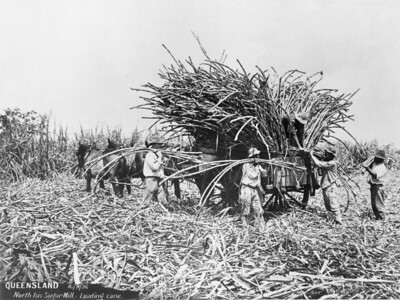
Australian South Sea Islanders loading sugar cane at North Isis sugar mill near Childers, Queensland, 1896
-
HungerGamesLover:) said:
:D/ Very cool
Man in a cane chair with a newspaper and a pipe in Childers, Queensland, 1916
-
Vesna Verencevic said:
Pipe smoking is the practice of tasting (or, less commonly, inhaling) the smoke produced by burning a substance, most commonly tobacco, in a pipe. It is the oldest traditional form of smoking. Although it has declined in popularity it is still widely practiced and remains common in some parts of Scandinavia. Regular pipe smoking is known to carry serious health risks including increased danger of various forms of cancer as well as pulmonary and cardiovascular illnesses. Albert Einstein (1879-1955), German scientist. He was known for smoking a pipe and once said, "I believe that pipe smoking contributes to a somewhat calm and objective judgment in all human affairs." Source: en.wikipedia.org/wiki/Pipe_smoking
Family in a car with a dead carpet snake Childers area
-
Vesna Verencevic said:
Carpet python Morelia spilota Carpet python Photo: Queensland Government Carpet python Photo credit: Queensland Government Non-venomous The carpet python has many colour variations ranging from pale to darker greyish-green or brown. It has black-edged pale blotches enclosing pale yellow spots and markings. The belly is cream or yellow, variegated with dark grey scales. The scales on top of the head are granular (there are no large head shields between the eyes). It is often found in trees, sometimes living in another animals' burrow. These pythons are often encountered on the road on warm spring and summer nights in all habitat types within their range. They are mainly active at night, feeding on mammals, reptiles, birds and frogs. They grow to an average length of 2m (specimens are known to exceed 4m). This species is found throughout Brisbane and has even been found in the centre of the city. Source: environment.des.qld.gov.au/wildlife/animals/living-with/s...