williamcrampandsons
100 photos tagged williamcrampandsons, from 7 members of Flickr Commons.
When were these photos taken?
Where were these photos tagged?
2% of these photos are geotagged.
Related tags
Tags that often appear on the same photos:
- williamcrampsons
- unitedstatesnavy
- ship
- usnavy
- usn
- crampsons
- crampandsons
- libraryofcongress
- xmlns:dc=httppurlorgdcelements11
- oceanliner
- warship
- cruiser
- usarmy
- unitedstatesarmy
- troopship
- receivingship
- wardline
- protectedcruiser
- hospitalship
- ah3
- usscomfort
- sshavana
- usathavana
- ssyucatan
Members using this tag
- The Library of Congress
- SDASM Archives
- SMU Libraries Digital Collections
- George Eastman Museum
- U.S. National Archives
- State Library of Queensland
- UBC Library Digitization Centre
Photos
A selection of photos tagged williamcrampandsons:
Loading photos…
Recent uploads
The last upload was April 2019.

05_01619 USS Aroostook Aircraft Tender SD Bay from SDASM Archives uploaded April 2019

john murphy collection image from SDASM Archives uploaded March 2019

world war two pearl harbor from SDASM Archives uploaded June 2018

john torigian collection image USS Baltimore (C-3 / CM-1) from SDASM Archives uploaded February 2018

Painting NORTHERN PACIFIC (LOC) from The Library of Congress uploaded July 2017
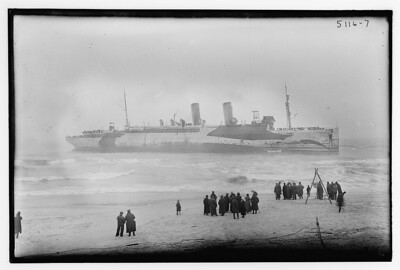
Unidentified ship (LOC) from The Library of Congress uploaded July 2017

NC-1 at Trepassey (LOC) from The Library of Congress uploaded February 2017

NC-3 & PRAIRIE (LOC) from The Library of Congress uploaded February 2017

Trepassey Bay -- U.S. naval ships (LOC) from The Library of Congress uploaded February 2017

NC-1 warming up by "Prairie" (LOC) from The Library of Congress uploaded February 2017

NC-1 at Halifax (LOC) from The Library of Congress uploaded February 2017

NC-1 at Halifax (LOC) from The Library of Congress uploaded February 2017

NC-1 at Halifax (LOC) from The Library of Congress uploaded February 2017

NC-1 & NC-3 at Halifax (LOC) from The Library of Congress uploaded February 2017

Rescues from GREAT NORTHERN (LOC) from The Library of Congress uploaded November 2016
Conversations
Here’s a selection of the conversations happening on these photos:
Painting NORTHERN PACIFIC (LOC)
- swanq said:
- Art Siegel said:
- Art Siegel said:
NC-1 at Halifax (LOC)
-
Art Siegel said:
see

-
TVL1970 said:
The hulk of USS Baltimore was recently discovered at about 600 meters (1,970 feet) depth, upright and intact on the flat sandy bottom of the Musicians Seamounts, northwest of Oahu. It was there where she was towed out to sea and scuttled on September 22, 1944, after a long and varied career with the US Navy. Baltimore was even present at Pearl Harbor, serving as a receiving ship, during the surprise attack by the Imperial Japanese Navy (IJN) on December 7, 1941. Below is a link to high-definition video of her hulk taken by one of NOAAS Okeanos Explorer's (R 337) remotely operated vehicles (ROV), on September 29, 2017. She is in relatively good shape considering her age and the 70-plus years spent on the ocean floor. Note also the footage of her distinctive stern opening (added to the ship when she was fitted for mine-laying), that is also apparent in this series of Bain photos of the NC flying boats' stopover in Nova Scotia. oceanexplorer.noaa.gov/okeanos/explorations/ex1708/dailyu...
-
Art Siegel said:
fascinating.. thanks.
Vesuvius U.S.N.

-
TVL1970 said:
The unique dynamite gun cruiser, USS Vesuvius (1888). See: hamptonroadsnavalmuseum.blogspot.com/2015/06/uss-vesuvius... USS Vesuvius was an experimental ship in the late 1800s when the US Navy was developing its new steel navy. Built at the Philadelphia Navy Yard, the ship was commissioned in 1890. The hope was that this small ship would have a formidable enough armament that it would be a cost effective threat to enemy battleships. At over 21 knots, speed was its best defensive measure. The most unique aspect of this vessel were the three 15-inch guns protruding from the forward deck. They fired explosive shells which consisted of several hundred pounds of "desensitized blasting gelatin" in a metal casing. The casing was fitted with a wood sabot to ensure a seal in the barrel, which was vital as the volatile composition of these shells only allowed compressed air to be used as a propellant. Although the dynamite shell had great potential, and there was a stealth aspect to firing without gunpowder, the ship had some severe flaws for naval warfare. It had to be pointed where it wanted to fire, and its range was limited to less than 2 miles (controlled by air pressure). See also: en.wikipedia.org/wiki/USS_Vesuvius_(1888)