riverlagan
7 photos tagged riverlagan, from 2 members of Flickr Commons.
When were these photos taken?
Where were these photos tagged?
57% of these photos are geotagged.
Related tags
Tags that often appear on the same photos:
- northernireland
- ulster
- lagan
- glassnegative
- nationallibraryofireland
- belfast
- robertfrench
- williamlawrence
- ireland
- lawrencephotographcollection
- coantrim
- hillsborough
- countydown
- ruraldistrictcouncil
- proni
- docks
- antrim
- workers
- shipbuilding
- cranes
- 1890s
- workmanclarkco
- proniwelchirelandirishcountrylifegenealogyancestryulsterbelfastnorthernireland
- lawrencephotographicstudio
Members using this tag
Photos
Photos tagged riverlagan:
Loading photos…
Recent uploads
The last upload was January 2021.

Fishing on The Lagan, Broomhedge from Public Record Office of Northern Ireland uploaded January 2021

Dromara, Co. Down from Public Record Office of Northern Ireland uploaded January 2021
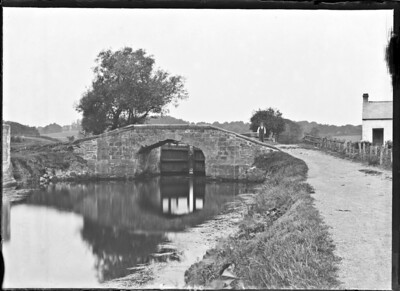
Third Lock, River Lagan, Belfast, Co. Antrim from National Library of Ireland on The Commons uploaded January 2019

Boat House, Belfast, Co. Antrim from National Library of Ireland on The Commons uploaded March 2015

River Lagan, Belfast from Public Record Office of Northern Ireland uploaded March 2014

No. 5 Ferry, Belfast Harbour from National Library of Ireland on The Commons uploaded March 2012

Pilot Office, Belfast from National Library of Ireland on The Commons uploaded March 2012
Conversations
Here’s a selection of the conversations happening on these photos:
Third Lock, River Lagan, Belfast, Co. Antrim
- 6 older comments, and then…
- Robin Parkes said:
- Sharon Corbet said:
- beachcomber australia said:
- Sharon Corbet said:
- beachcomber australia said:
Pilot Office, Belfast
- 28 older comments, and then…
-
beachcomber australia said:
Those cannon look like captured Russian ones from the siege of Sevastopol in the Crimean War (1855). Pairs were sent to every major city in the British Empire - en.wikipedia.org/wiki/Siege_of_Sevastopol_(1854%E2%80%931855) . Recently did some digging on two in Sydney, Australia - www.flickr.com/photos/powerhouse_museum/2362659579/
-
National Library of Ireland on The Commons said:
beachcomber australia They look exactly the same, especially the wheels and the curvy stand thing at the back! These upended cannons are near where I live in Dublin. Have heard all manner of stories about where they came from - Napoleonic Wars, or from a 19th century British frigate... Found this on 1861 Belfast / Ulster Street Directory: "Two Russian guns, taken during the Crimean war at Sebastopol - both 46 pounders, and bearing inscriptions in Russian characters - presented to the town as trophies, are now mounted in a commanding position, upon the front esplanade of this fine suite of public buildings - for ornament alone, of course", though these two were placed near the Custom House.
-
Dave Colthorpe said:
Is that a Steamship getting built in the Background?
-
National Library of Ireland on The Commons said:
Dave Colthorpe Anyone better acquainted with steamship shapes field this?
-
Gerry Ward said:
The Pilot Office stood on the north side of the Lagan at the entrance to Spencer Dock. Spencer Dock, Dufferin Dock and York Dock were all enlarged, so where the Pilot Office stood is probably under water now - coordinates are about 54.612026,-5.913563. The Pilot Office had been described as "a collapsed telescope in the Tudor manner". The cannon are from the Crimean War. There are two ships being built in the background at the shipyards of Workman, Clark & Co. This company began in 1879 and pioneered the development of the refrigerated steamer. At their peak Workman, Clark employed over 12,000 employees and was described in Belfast as the "Wee Yard". It occupied 80 acres on the north side of the River Lagan and closed in 1935.
No. 5 Ferry, Belfast Harbour
- 29 older comments, and then…
-
heady school said:
All flat caps, but for two bowlers.
-
National Library of Ireland on The Commons said:
[http://www.flickr.com/photos/eyelightfilms] Foremen?
-
John Spooner said:
Belfast News-Letter 8th March 1888: BELFAST HARBOUR STEAM FERRY BOAT THE BELFAST HARBOUR COMMISSIONERS are prepared to receive TENDERS for the supply of a STEAM FERRY BOAT, with Steel Hull and Direct Acting Engines , in accordance with a Drawing and Specifications, which may be seen at the Office of the Harbour Engineer, T. R. Salmond, Esq, from whom any further information may be obtained. Sealed Tenders, addressed to the undersigned, and endorsed "Tender for Ferry Boat" to be sent in on or before MONDAY, the 22nd proximo. The Commissioners do no bind themselves to accept the lowest or any Tender. W.A. Curry, Secretary. Harbour Office, Belfast. 7th March 1888 The same edition also has a notice from the Harbour Commissioners inviting "TENDERS for the supply of CLOTHING required for the Harbour Police &c". No specific mention of hats.
-
John Spooner said:
The minutes of the Belfast Harbour Board, as published in the Belfast News-Letter, April 3rd, 1889, state: "... it was decided to issue a cheque in favour of Messrs. Workman, Clarke, & Company for £342 16s in payment for No 2 ferry-boat, built by that firm." www.gracesguide.co.uk/Workman,_Clark_and_Co In 1890 No 3 ferry boat was reported to have been fitted with fire-extinguishing appliances, having been placed on station in March 1889. But I can't find any mention of No 5.
-
John Spooner said:
Getting there... Jan 29th, 1891: "The outlines and build of the new boat, No4, denote safety and swiftness"
Boat House, Belfast, Co. Antrim
- 8 older comments, and then…
-
Sharon Corbet said:
It was only built in 1897 so the photo's after that. Unfortunately, it no longer exists as it was blown up in the 1970's.
-
Sharon Corbet said:
There's a 1936 photo with some of the history: This club house was opened in 1898 by Mrs W J Pirrie, wife of the managing director of Harland and Wolff; among the well-wishers was Mr Gustav Wolff, also representing Belfast craft of a larger size. The club was 23 years old, and had 300 members to share 'the delightful pastime of rowing'. The lower dock could accommodate the club's 'fleet' of 24 pleasure boats, but racing boats had to tie up at St John's Wharf. A speaker appealed to Belfast Council to complete the scene by building a dock in the Ormeau Park where it bordered the river. The band of the North Staffords provided the music, and the view shows that music was part of the arrangements in 1936.
-
Sharon Corbet said:
A picture of the boathouse after the bombing.
-
Niall McAuley said:
The boat club is still here, without this Boat House, on Lockview road. You can see oarsmen at work in this Bing aerial view.
-
Niall McAuley said:
The DIA says it was destroyed by fire and replaced in 1912.