sailingship
344 photos and 57 illustrations tagged sailingship, from 20 members of Flickr Commons.
When were these photos & illustrations taken?
Where were these photos & illustrations tagged?
4% of these photos & illustrations are geotagged.
Related tags
Tags that often appear on the same photos & illustrations:
- vesseltype
- portsharbours
- publicdomain
- bldigital
- cutter
- mechanicalcurator
- vol0
- barque
- ship
- pubplacelondon
- tallship
- sherlocknet:category=objects
- small
- sherlocknet:tag=england
- medium
- maritimearts
- starofindia
- sherlocknet:tag=london
- sherlocknet:tag=land
- 1979
- maritimemuseumofsandiego
- large
- sherlocknet:tag=side
- sherlocknet:tag=water
Members using this tag
- New Zealand Maritime Museum Hui Te Ananui A Tangaroa
- British Library
- SDASM Archives
- Australian National Maritime Museum on The Commons
- National Library NZ on The Commons
- The Library of Congress
- Powerhouse Museum
- National Library of Ireland on The Commons
- State Library of Queensland
- Museum of Hartlepool
- Archief Alkmaar Commons
- National Library of Medicine
Photos & Illustrations
Show photos & illustrations photos (344) illustrations (57)
A selection of photos & illustrations tagged sailingship:
Loading photos & illustrations…
Recent uploads
The last upload was 6 days ago.
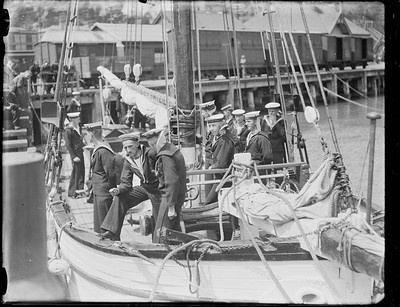
Crew on RNVR DEVERON, Lyttelton wharf from New Zealand Maritime Museum Hui Te Ananui A Tangaroa uploaded 6 days ago

RNVR DEVERON training cutter on Lyttelton Harbour from New Zealand Maritime Museum Hui Te Ananui A Tangaroa uploaded 6 days ago

Three men on the deck of a sailing vessel from New Zealand Maritime Museum Hui Te Ananui A Tangaroa uploaded 6 days ago

RONGA (1900) from New Zealand Maritime Museum Hui Te Ananui A Tangaroa uploaded 6 days ago
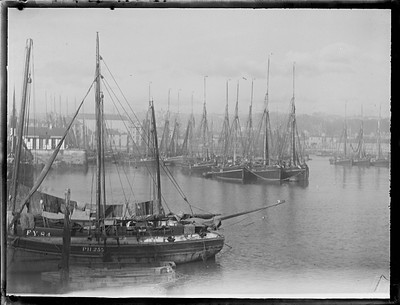
Thames sailing barges, berthed from New Zealand Maritime Museum Hui Te Ananui A Tangaroa uploaded 6 days ago

Cobbled square beside a harbour, with kiosks from New Zealand Maritime Museum Hui Te Ananui A Tangaroa uploaded 6 days ago

Illustration of MARGARET GALBRAITH (1868) from New Zealand Maritime Museum Hui Te Ananui A Tangaroa uploaded 6 days ago

Schooner ILMA (1886) from New Zealand Maritime Museum Hui Te Ananui A Tangaroa uploaded 6 days ago

Barquentine WANGANUI (1902) from New Zealand Maritime Museum Hui Te Ananui A Tangaroa uploaded 6 days ago
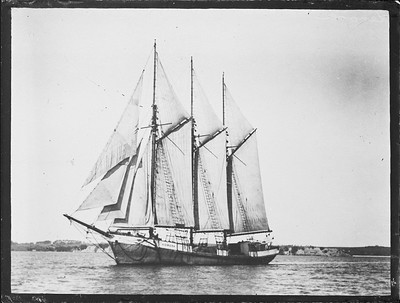
KORORA sailing ship offshore from New Zealand Maritime Museum Hui Te Ananui A Tangaroa uploaded 6 days ago
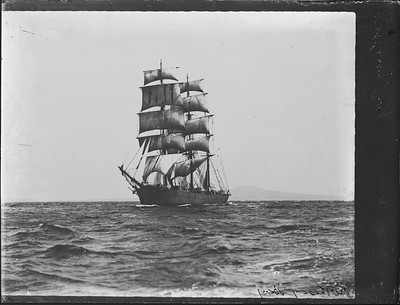
Unidentified three-masted sailing ship at sea from New Zealand Maritime Museum Hui Te Ananui A Tangaroa uploaded 6 days ago

Unidentified three-masted sailing ship at sea from New Zealand Maritime Museum Hui Te Ananui A Tangaroa uploaded 6 days ago

Unidentified three-masted sailing ship at sea from New Zealand Maritime Museum Hui Te Ananui A Tangaroa uploaded 6 days ago


Conversations
Here’s a selection of the conversations happening on these photos & illustrations:
Sailing ship Alcestis being towed from rocks where she had run aground, probably in Otago Harbour, 1880s

- stormchaser_nz said:
- mambo1935 said:
- b0b said:
- John Carson said:
French three-masted barque VINCENNES aground on Manly Beach Sydney, May or June 1906

-
Only Peace will Save the World said:
WOW!
-
arctodus said:
There's a very interesting news report and a different picture of this event here: www.flickr.com/photos/johncowper/6603125835/
-
Australian National Maritime Museum on The Commons said:
arctodus nice one, thanks for that arctodus! Great poem at the end there by Henry Lawson :)
DRUMALIS and SS SHAFTESBURY in Sydney Harbour

-
beachcomber australia said:
I spy with my little eye - something beginning with "S" !! Or is it something beginning with "W" ??
-
beachcomber australia said:
Thinking it might be the SUNBEAM or HMS WATERWITCH but the more I look the less sure. I can't see the stays on the side of the hull which were prominent on both - see discussion and links -
 - but funnel looks too short
 ST GEORGE
en.wikipedia.org/wiki/HMS_Waterwitch_(1892)
Hi-res image of HMS WATERWITCH - handle.slv.vic.gov.au/10381/28269
Ted might know!
ST GEORGE
en.wikipedia.org/wiki/HMS_Waterwitch_(1892)
Hi-res image of HMS WATERWITCH - handle.slv.vic.gov.au/10381/28269
Ted might know! -
beachcomber australia said:
SV DRUMALIS - built 1890, wrecked off Nova Scotia in 1901 - full details - www.plimsoll.org/resources/SCCLibraries/WreckReports/1811... www.wrecksite.eu/wreck.aspx?33465 Hi-res image showing many of the same stains on her hull as above, and possibly the same warship in Farm Cove, left of frame - handle.slv.vic.gov.au/10381/12213 1892 - first visit to Sydney - trove.nla.gov.au/ndp/del/article/13871651 1896 - trove.nla.gov.au/ndp/del/article/14056426 1897 - trove.nla.gov.au/ndp/del/article/14124772 2/6/1897 - "The four-masted barque Drumalis is at anchor in Neutral Bay, loading Bulli coal for San Francisco." trove.nla.gov.au/ndp/del/article/108056229
-
Australian National Maritime Museum on The Commons said:
beachcomber australia Well spotted re the SUNBEAM / WATERWITCH - Brassey was back in Australia with his yacht in the late 1890s so the date would line up. I don't think we were able to establish when WATERWITCH was painted this colour but our resident expert Ted may know!