order
12 photos and 3 illustrations tagged order, from 7 members of Flickr Commons.
When were these photos & illustrations taken?
Where were these photos & illustrations tagged?
6% of these photos & illustrations are geotagged.
Related tags
Tags that often appear on the same photos & illustrations:
- usnationalarchives
- documentedrightsexhibit
- publicdomain
- children
- libraryofcongress
- xmlns:dc=httppurlorgdcelements11
- organizations
- fraternalsocieties
- slavery
- slave
- seizure
- nara:arcid=2641470
- orderofseizure
- jackierobinson
- courtmartial
- jackrrobinson
- courtmartialofjackierobinson
- nara:arcid=2641509
- lithograph
- georgecruikshank
- phrenology
- medicineinart
- phrenologicalillustrations
Members using this tag
- U.S. National Archives
- The Library of Congress
- National Library of Medicine
- Community Archives of Belleville & Hastings County
- National Library of Ireland on The Commons
- The National Archives UK
- British Library
Photos & Illustrations
Show photos & illustrations photos (12) illustrations (3)
Photos & Illustrations tagged order:
Loading photos & illustrations…
Recent uploads
The last upload was August 2023.

Illustration of 'Peterloo' from The National Archives UK uploaded August 2023

Drawing from National Library of Medicine uploaded June 2023

Knowing Faculties - Order from National Library of Medicine uploaded June 2023

HC05954 from Community Archives of Belleville & Hastings County uploaded July 2018

HC05955 from Community Archives of Belleville & Hastings County uploaded July 2018

Poor Clare's Carlow Convent Congregation Carefully Congregated! from National Library of Ireland on The Commons uploaded December 2017
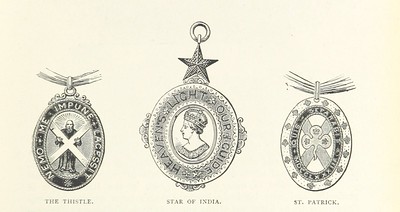
British Library digitised image from page 99 of "Rambles round London Town" from British Library uploaded December 2013

General Court Martial Orders Number 130, Headquarters XXII Corps, 08/23/1944 (page 1 of 2) from U.S. National Archives uploaded November 2009

General Court Martial Orders Number 130, Headquarters XXII Corps, 08/23/1944 (page 2 of 2) from U.S. National Archives uploaded November 2009

Order of Seizure from the Case File of U.S. v. Negro Slave Ben, 07/05/1816 (page 2 of 2) from U.S. National Archives uploaded November 2009

Order of Seizure from the Case File of U.S. v. Negro Slave Ben, 07/05/1816 (page 1 of 2) from U.S. National Archives uploaded November 2009

Pass ball relay, Pelham Bay Park (LOC) from The Library of Congress uploaded January 2008

King Manuel [detail] (LOC) from The Library of Congress uploaded January 2008


Conversations
Here’s a selection of the conversations happening on these photos & illustrations:
King Manuel [detail] (LOC)
-
Vasco Riobom said:
Young Manuel was born in the last year of the reign of his grandfather, King Luis I. He was created Duke of Beja. He was the son of Carlos I and Amélie of Orleans. On 1 February 1908 the royal family returned from the palace of Vila Viçosa to Lisbon. They travelled by coach to Almada and from then took a boat to cross the Tagus River and disembarked in Cais do Sodré in central Lisbon. On their way to the royal palace, the carriage with King Carlos I and his family passed through Terreiro do Paço. While crossing the square, shots were fired from the crowd by at least three men: Alfredo Costa, Manuel Buiça and Aquilino Ribeiro. The King died immediately; his heir Crown Prince Luís Filipe was mortally wounded; Prince Manuel hit in the arm and Queen Amélie surprisingly unharmed. It was the quick thinking of Queen Amélie that saved her son Manuel. [1] The assassins were shot at the spot by members of the bodyguard and later recognized as members of the Portuguese Republican Party. About twenty minutes later, Prince Luis Filipe died and days later, Manuel was acclaimed King of Portugal. The young King, who had not been groomed for kingship, sought to save the fragile position of the Braganza monarchy by dismissing the dictator João Franco and his entire cabinet in 1908. The ambitions of the various political parties made Manuel's reign a turbulent one. Free elections were declared in which republicans and socialists won an overwhelming victory. [2] The murder of a prominent republican precipated the revolution that had been so long in preparation. [3] Revolution erupted on October 4, 1910. An illegal military coup was commenced by soldiers who were joined by some civilians and municipal guards attacking loyal garrisons and the royal palace, while the guns of a warship added to the revolutionary colonnade. Three days of almost constant street fighting were enough to drive out the young King. [4] Manuel fled on the royal yacht to British ruled Gibraltar. [5] Portuguese Royalty House of Braganza-Wettin Pedro V Luís I Children Carlos, Prince Royal and Duke of Braganza (future Carlos I) Infante Afonso, Duke of Porto Carlos I Children Luís Filipe, Prince Royal and Duke of Braganza Infante Manuel, Duke of Beja (future Manuel II) Manuel II King Manuel II lived in exile in the United Kingdom. While King he had been made a Knight of the Garter by his distant cousin King Edward VII. His great-grandfather King Ferdinand I had been a first cousin of Queen Victoria and Prince Albert. O FromThe Wikipedia
-
swanq said:
See www.flickr.com/photos/library_of_congress/2163490798/ for a fuller view of the scene (at St George's Chapel, Windsor Castle). It was on June 10, 1911, when the Prince of Wales (future Edward VIII) was invested with the Order of the Garter.
-
antonioluisousa said:
Dom Manuel II
-
The Library of Congress said:
Thanks vasco.r, swang and antosousa: We will update the information and reload the description.
Illustration of 'Peterloo'
-
Dave Collier said:
A student of British 19th century history could do worse than look up the less well-known story of the Preston Martyrs (mill workers striking for better working conditions shot dead in 1842 by troops).
Poor Clare's Carlow Convent Congregation Carefully Congregated!
- 6 older comments, and then…
-
Rory Sherlock said:
Streetview: www.google.ie/maps/@52.8365952,-6.9403422,3a,75y,217.63h,... OSI 25" map: maps.osi.ie/publicviewer/#V2,671399,676642,12,9
-
Niall McAuley said:
Streetview shows that a large church has been built at left since this photo.
-
Niall McAuley said:
Actually, a large church was moved here in 1929, according to the DIA. The Church of Ireland Bruen Testimonial was bought and moved! Here it is on the 25", in its previous life as St. Anne's CI church.
-
Niall McAuley said:
From a page with the full story, this relevant detail: In 1893, the enclosed order of the Poor Clares came to Carlow, and moved into a house built on the Wellington Bridge spanning the River Barrow. In 1900, they moved to a purpose-built monastery on a site beside the land where Saint Anne’s would be relocated, and so Saint Clare’s seemed to be an appropriate name for the rebuilt church. So we are in or after 1900.
-
Mike said:
Whoever wrote that heading, must have gotten a lot of stars in English class.