thiepvalmemorial
55 photos tagged thiepvalmemorial, from 2 members of Flickr Commons.
When were these photos taken?
Where were these photos tagged?
None of these photos are geotagged.
Related tags
Tags that often appear on the same photos:
- thegreatwar
- wwi
- firstworldwar
- greatwar
- soldier
- war
- worldwarone
- westernfront
- ww1
- worldwar
- worldwar1
- centenary
- iwm
- 19141918
- blackandwhiteprints
- warphotography
- photographicprints
- bondofsacrifice
- imperialwarmuseums
- somme
- battle
- military
- armedservices
- britisharmy
Members using this tag
Photos
A selection of photos tagged thiepvalmemorial:
Loading photos…
Recent uploads
The last upload was November 2018.

Carl Gwartney Collection Image from SDASM Archives uploaded November 2018

Private George William Binns from IWM Collections uploaded July 2013

Private Frank Almond from IWM Collections uploaded June 2013

Private Harold Billyard from IWM Collections uploaded May 2013

Private William J Barrie from IWM Collections uploaded April 2013

Private James Burton from IWM Collections uploaded February 2013

Private John Henry Williams from IWM Collections uploaded February 2013

2 Lieutenant Lloyd Allison Williams from IWM Collections uploaded January 2013

Private Albert Leonard Neeves from IWM Collections uploaded January 2013

2 Lieutenant Herbert William Thompson from IWM Collections uploaded January 2013

Rifleman Harry Battye from IWM Collections uploaded January 2013

Lieutenant Colonel Sidney John Wilkinson from IWM Collections uploaded January 2013

Lance Sergeant Claude Fitzgerald Burton from IWM Collections uploaded December 2012

Captain Geoffrey George Horn Batty from IWM Collections uploaded December 2012

Corporal Edward Richard May from IWM Collections uploaded December 2012
Conversations
Here’s a selection of the conversations happening on these photos:
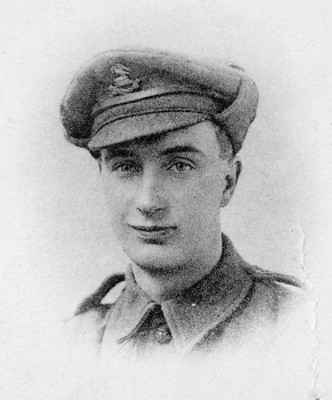
2 Lieutenant Lloyd Allison Williams
from IWM Collections
- 1 older comment, and then…
-
Denise Jackson said:
At the time of the 1911 census he was a pupil at Kingswood School, aged 17. His place of birth was given as Pietermaritzburg, Natal.
His Medal Roll Index Card shows that he was Private 1562 in the Royal Highlanders before transferring to the Duke of Cornwall's Light Infantry. -
Charlotte Czyzyk said:
Help piece together the Life Stories of more than 8 million men and women who made a contribution during the First World War at www.livesofthefirstworldwar.org/
Private Harold Billyard
from IWM Collections
-
Atnomis said:
BILLYARD, HAROLD Rank:Private Service No:26147 Date of Death:12/10/1916 Regiment/Service:The King's (Liverpool Regiment) 17th Bn. Panel ReferencePier and Face 1 D 8 B and 8 C. MemorialTHIEPVAL MEMORIAL Additional Information:
-
Atnomis said:
Harold was from Walton. Battle know as Flers.
-
Historydevotee said:
UK, Soldiers Died in the Great War, 1914-1919 Name:Harold Billyard Birth Place:Liverpool Residence:Walton, Liverpool Death Date:12 Oct 1916 Death Location:France & Flanders Enlistment Location:Prescot, Lancs Rank:Private Regiment:King's (Liverpool Regiment) Battalion:17th Battalion Number:26147 Type of Casualty:Killed in action Theatre of War:Western European Theatre
-
Gary Donaldson said:
Harold Brocklesby Billyard born 1895 at West Derby, Lancashire. Son of Frederick William and Jane Elizabeth (nee Amphlett) Billyard originally of Salford, Lancashire. Orders for the attack on 12th October 1916 read as follows: Secret 89th Infantry Brigade Operation Order No. 59 by Brigadier General the Hon. F. C. Stanley D.S.O. Headquarters 11.X.1916. Reference attached plan 1/10,000 1. The Fourth British and Sixth French Armies will continue the attack to-morrow, 12th October, at an hour zero to be notified later. the whole XV. Corps is attacking. The 30th Division will have on its Right 12th Division, on its Left the 9th Division of the III Corps. Boundaries are shewn on the attached plan. The troops believed to be opposite us are 6th Bavarian Reserve Division and the 6th Active (Brandenberg) Division. 2. The 30th Division will capture and consolidate the objective indicated by the BROWN line on the attached plan. The operation is to be conducted in three stages: - (i) At Zero the Artillery barrage will begin and the Infantry will advance to the attack and establish itself on the GREEN line. (ii) At Zero + 20 the Infantry will advance to the BROWN line which will be consolidated. (iii) After the capture of the BROWN line, every effort will be made to establish posts on the approximate line marked in red, so as to obtain observation to the North. It is intended later to join up these posts so as to form a trench of departure for subsequent operations. 3. The 89th Infantry Brigade will be on the Left of the 30th Division attack, with boundaries as shown on the attached plan. The attack will be carried out with two Battalions in the front line, one in support, and one in reserve. The 2nd Battn Bedfordshire Regt. will be on the Right. The 17th Battalion K. L. R. will be on the Left. The 20th Battalion K.L.R. will be in Support. The 19th Battalion K.L.R. will be in Reserve. The dividing line between the objective of 2nd Battalion Bedfordshire Regiment and 17th Battalion K.L.R. will be a line (Shown in YELLOW on the Plan) drawn from their present point of junction to M.18.c.6/2. thence to M.18.c.8/8 to M.18.b.0/4. //.
-
Charlotte Czyzyk said:
Help piece together the Life Stories of more than 8 million men and women who made a contribution during the First World War at www.livesofthefirstworldwar.org/