machineguncorps
12 photos tagged machineguncorps, from 2 members of Flickr Commons.
When were these photos taken?
Where were these photos tagged?
None of these photos are geotagged.
Related tags
Tags that often appear on the same photos:
- soldier
- war
- military
- wwi
- worldwarone
- ww1
- greatwar
- firstworldwar
- worldwar
- worldwar1
- centenary
- iwm
- thegreatwar
- 19141918
- blackandwhiteprints
- warphotography
- photographicprints
- bondofsacrifice
- imperialwarmuseums
- armedservices
- westernfront
- battle
- britisharmy
- officer
Members using this tag
Photos
Photos tagged machineguncorps:
Loading photos…
Recent uploads
The last upload was April 2014.

Cadets N.M. M.I. Ready for action (LOC) from The Library of Congress uploaded April 2014

Captain R W Brent MC from IWM Collections uploaded January 2014

Second Lieutenant H M Bradshaw from IWM Collections uploaded October 2013

2 Lieutenant Ernest Richard Leary from IWM Collections uploaded February 2013

Private Archibald Thomson from IWM Collections uploaded February 2013

Lieutenant Colonel Reginald Henry Napier Settle from IWM Collections uploaded August 2012

Captain H M Seton-Karr from IWM Collections uploaded May 2012

Private Geoffrey Bateson from IWM Collections uploaded May 2012

2 Lieutenant Eric Light from IWM Collections uploaded January 2012

Private Tom Clement Oglesby from IWM Collections uploaded January 2012

Sergeant John James Dwyer from IWM Collections uploaded October 2011

Lance Corporal Oliver Curtis New from IWM Collections uploaded October 2011
Conversations
Here’s a selection of the conversations happening on these photos:
Private Tom Clement Oglesby
from IWM Collections
- 3 older comments, and then…
- Paul C A Nixon said:
- Nebulous Knife said:
- Paul C A Nixon said:
- Gary Donaldson said:
- IWM Collections said:
2 Lieutenant Eric Light
from IWM Collections
-
Historydevotee said:
Probate records states: LIGHT Eric of Redcot Linton-road Hastings died on or since 26 March 1918 in France. Administration Lewes 20 April 1920 to Reginald Hough Light gentleman. Effects £196 17s 8d while the British Commonwealth War Graves Register states: LIGHT, 2nd Lt Eric "B" Coy, 40th Bn. Machine Gun Corps (Inf) 26th March 1918. Age 20. Son Lt Col R H Light (Indian Army, retired) and Mrs R H Light, of Redcot, Linton Road, Hastings
-
Historydevotee said:
Familysearch has the following: name:Eric Light gender:Male baptism/christening date:04 Jul 1897 baptism/christening place:Bhuj, Bombay, India birth date:03 Jun 1897 birthplace: death date: name note: race: father's name:Reginald Hough Light father's birthplace: father's age: mother's name:Maud Mary mother's birthplace: mother's age: indexing project (batch) number:C99916-5 system origin:India-EASy source film number:523879 reference number:
-
Gary Donaldson said:
Again I am grateful to Mr Graham Sacker, custodian of the Machine Gun Corps historical archive who provided the following detail on Eric Light. Monkton Combe School Register (1868-1964): Eric Light b 1897, 1st XI 13-14-15, Hockey XI 13-14, 1st XV 1913, Shooting VIII. Gt War - 2Lt MGC, w.front 1917-18. Kia. Lt Light was educated at Monkton Combe School, near Bath and at Hertford College, Oxford. He enlisted with No 4 Officers Cadet Battalion at Oxford on 11 July 1916 while the Battle of the Somme was in progress on the Western Front. He received his commission and was posted to the Western Front with 188 Company, Machine Gun Corps on 4 July 1917, joining the Company in the field on 21/7/1917. He fought in the Battle of Passchendaele and was wounded on 14 November 1917. On returning to active service, he joined 120 Company, Machine Gun Corps and fought in the action at Bullecourt on 25 February 1918. He was reported missing, aged 20, at Gommecourt during the Allied retreat on the night of 26 March 1918 whilst serving with the 40th Battalion MGC. He is commemorated on the Arras Memorial, Faubourg-d'Amiens Cemetery. Other memorials which bear his name include those at Monkton Combe School near Bath, Alexandra Park at Hastings, Sussex and St Mary-in-the Castle Church also at Hastings. Eric Light was the brother of Hilton Light (Lt.Col. IA).//
-
Charlotte Czyzyk said:
Help piece together the Life Stories of more than 8 million men and women who made a contribution during the First World War at www.livesofthefirstworldwar.org/
Captain H M Seton-Karr
from IWM Collections
- 1 older comment, and then…
-
Gary Donaldson said:
Henry Malcolm Seton-Karr, b. 21 Oct 1882, - Captain in the Life Guards 9 July 1916. [Sup to LG 8 Jul 1916]. Son of Sir Henry Seton-Karr KCMG of Kippilaw, St Boswell's, County Roxburgh, and Edith Eliza (Pilkington) of Roby Hall, Liverpool, (d. 1884). He had an older brother (George Bernard, b. 12 Sep 1881; d. 2 Apr 1896); and a younger sister (Edith Muriel, d. 1898); and a half-brother (Kenneth William b. 1897) and half-sister (Helen Mary) - from his father's second marriage to Jane Thorburn of 12 Buckingham Terrace, Edinburgh. Family home was later 47 Chester Square, London, SW1.//
-
Trench-Foote said:
Henry Seton-Karr was actually commissioned into the 2nd Dragoons (Royal Scots Greys) on 5th September 1914 on the Reserve of Officer List (so he probably had previous service experience). On 9th May 1915 he was attached or transferred to 1st Life Guards, still as a 2Lt. On 9th september 1916 he was made up to Captain in 1 LG and appointed to the Household Battalion. On 2nd April 1917 he took up a Captain appointment with the Machine Gun Corps (Cavalry) which he relinquished on 9th October 1918. It then appears that he became an Assistant Administrator with the Royal Air Force, relinquishing that post on 26th January 1919.
-
Wemmbley-Hogg said:
The Gazette shows 2Lt M H Seton-Karr was commissioned into the Royal Monmouthshire Militia Royal Engineers, aged 18, on 2 July 1901. He transferred to the 2nd Dragoons on 25 March 1902. His father, Sir Henry, died in 1914 and it looks like 47 Chester Square was his house in London. It also appears that he was Christened Malcolm Henry, and may have adopted 'Henry' as his 'called name' after his father's death.
-
Trench-Foote said:
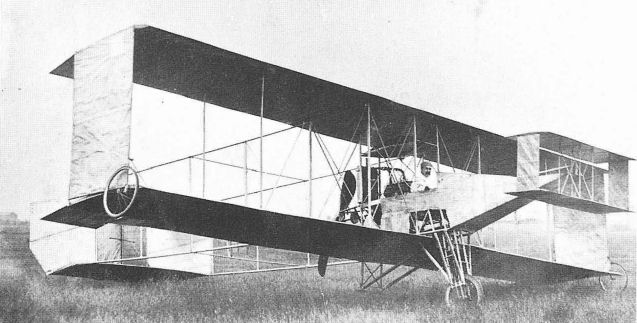
It seems that Henry Seton-Carr was an early aviator before the war. In December 1908 he ordered a Howard Wright bi-plane which he flew at Fambridge and from Camber Sands at Rye in Sussex. There is a photograph of him as a pilot at flyingmachines.ru/Images7/Putnam/EE/80-1.jpg
-
Gary Donaldson said:
Sir Henry Seton-Karr, Henry's father, died when the RMS Empress of Ireland sank in the St Lawrence River after colliding with a Norwegian collier, the SS Storstad, at around 0200hrs after leaving Quebec on 29th May 1914. 1,012 passengers and crew were drowned; there were 465 survivors. Apparently Sir Henry gave his lifebelt to another passenger who did not have one.//