irishrailways
5 photos tagged irishrailways, from 1 member of Flickr Commons.
When were these photos taken?
Where were these photos tagged?
20% of these photos are geotagged.
Related tags
Tags that often appear on the same photos:
- nationallibraryofireland
- cie
- jamespo’dea
- o’deaphotographcollection
- corasiompairéireann
- countywestmeath
- locationidentified
- countykildare
- nationalphotographicarchive
- permanentway
- driveramcgrath
- westmeath
- diesellocomotive
- engine
- driverscab
- mcgrath
- 121class
- flyingsnail
- iarnródéireann
- driver
- dials
- cap
- cabin
- 46milesignalcabin
Members using this tag
Photos
Photos tagged irishrailways:
Loading photos…
Recent uploads
The last upload was March 2026.

No Drones were harmed in this strike! from National Library of Ireland on The Commons uploaded March 2026

A big carriage and nearly a Beetle... from National Library of Ireland on The Commons uploaded May 2023

Holiday Camp for the lifting gang from National Library of Ireland on The Commons uploaded March 2022

Happy at his work! from National Library of Ireland on The Commons uploaded March 2020

Driver, A. McGrath, 46 Mile cabin, Co. Westmeath. from National Library of Ireland on The Commons uploaded September 2016
Conversations
Here’s a selection of the conversations happening on these photos:
No Drones were harmed in this strike!
- 3 older comments, and then…
- Mike Grimes said:
- National Library of Ireland on The Commons said:
- Mr BEEP! & THE RASCALS *Arf!* said:
- Niall McAuley said:
- Niall McAuley said:
A big carriage and nearly a Beetle...
- 15 older comments, and then…
-
beachcomber australia said:
BCI 239 ? (I can't find my glasses!)
28 October 1968 was a Monday ...28 October 1967 was a Saturday ... -
beachcomber australia said:
The internet is sometimes AMAZING!
"beetle.ie - Ireland’s first ever census on classic Irish aircooled VWs" - beetle.ie/vehicle/bci-239/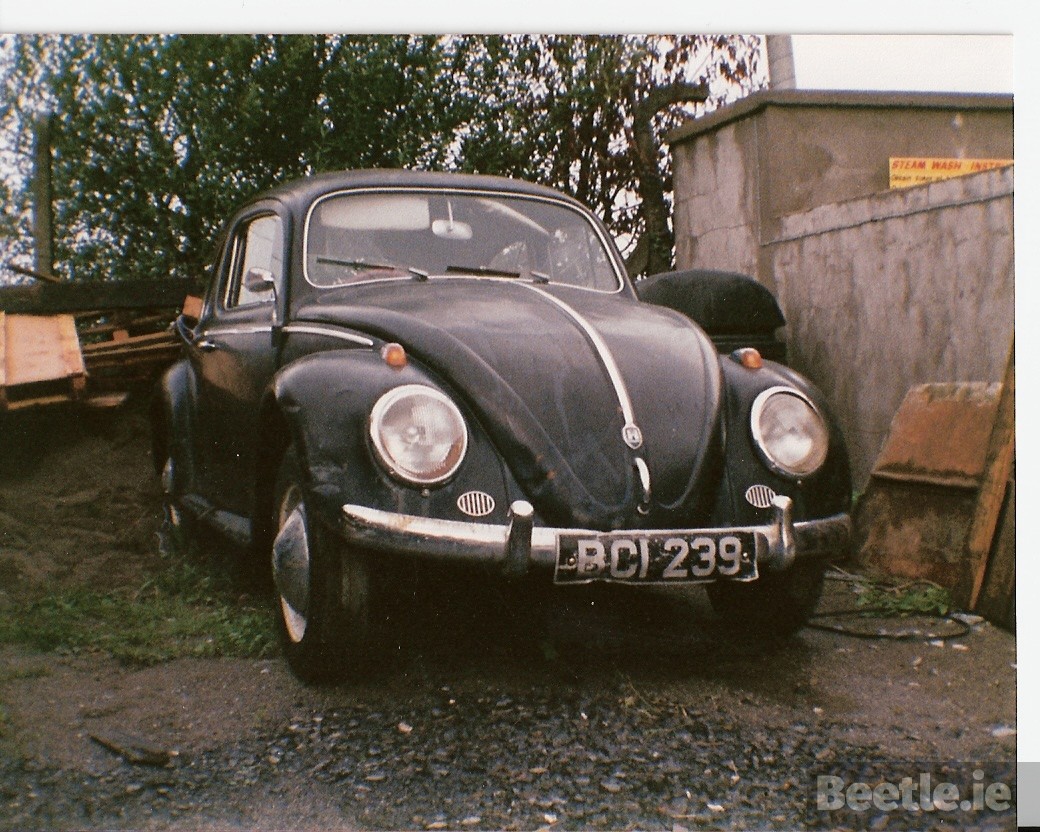
-
Niall McAuley said:
beachcomber australia Incredible! The O'Dea shot is listed as Athy in the catalogue, that Beetle page says: It was parked at the side of a garage in Monastervin, County Kildare. in the mid 80s, 20 years later, just 20km up the road.
-
Niall McAuley said:
The Streetview shows that the layout at Athy is very simple now, just twin tracks straight through, but on the 25" it was more complex, with Cattle pens West of the line and track to the Goods shed at left/East. There was a section with buffers behind the surviving water tank. I think that is where the Bowater carriage was pictured, given the points in the foreground.
-
National Library of Ireland on The Commons said:
beachcomber australia Niall McAuley Incredible is right!!
Holiday Camp for the lifting gang
- 6 older comments, and then…
-
John Spooner said:
Belfast Telegraph - Tuesday 27 January 1959:
Eire to offer holiday camp coaches The Eire Transport Board, C.I.E., is to provide holiday camping coaches next summer at Killarney, Dungarvan and Carrick-on-Shannon. Announcing this last night, Dr. C. S. Andrews, chairman of the Board, said the coaches would be let at a very reasonable cost to families and parties travelling by C.I.E. train services. If the idea caught on, the scheme would be extended. Dr. Andrews said the cost of hotel accommodation for large families often prevented them from having holidays in districts they would like to visit. In each of the camping coaches, which would be located at or near station premises, there would be sleeping accommodation for eight persons, a living room and a fully equipped kitchen, and all crockery. cutlery, cooking utensils, towels and bed linen would be supplied.
-
beachcomber australia said:
15 February 1968 was a Thursday ...
-
Niall McAuley said:
A "lifting gang" would be the lads pulling up the tracks after a line is closed, but according to eiretrains; Passenger services on the Mallow to Waterford line ceased in 1967, but the section just west of Dungarvan town (Ballinacourty) to Waterford remained in regular use until 1982 serving the magnesite plant there. The tracks were eventually taken up in the late 1990s.
-
beachcomber australia said:
SPOTTED ! At 0.25 in this 1966 film - youtu.be/rIO9F94Vz5U
-
Niall McAuley said:
I think Ballynacourty is actually East of Dungarvan, so these lads were probably lifting from Dungarvan to Mallow.