haviland

531 photos tagged haviland, from 1 member of Flickr Commons.

When were these photos taken?

531
2010


Where were these photos tagged?

None of these photos are geotagged.

Tags that often appear on the same photos:

Members using this tag

Photos

A selection of photos tagged haviland:

Loading photos…

See more on flickr.com →

Recent uploads

The last upload was July 2010.

Conversations

Here’s a selection of the conversations happening on these photos:
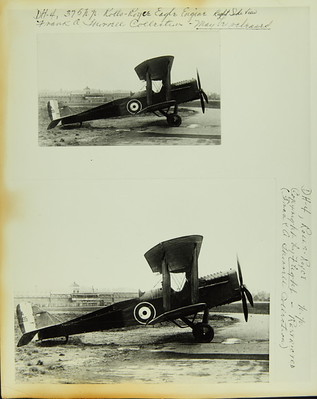
De Haviland DH-4

  • Stig Jarlevik said:
    Any clue which company converted this one? I have a photo of the Dayton Wright Cruiser and this is not that one.... Stig
  • SDASM Archives said:
    None sorry

De Haviland D.H.4

  • Aviatik IMG said:
    Your designation for this photo of DH-4 is incorrect. This is a D.H.4, a license-built example from the British firm, Westland fitted with a Siddeley-Puma(?) engine. The parent firm, Airco in Britain, whose designer was Geoffrey de Havilland, was the originator of the type, Airco D.H.4. The official designation for this aircraft is DeHavilland D.H.4 (note the periods after the D and H.) There is an important distinction here. The aircraft shown above (of No. 27 Sqdn. RFC/RAF) was built in Britain by Westland, one of several firms contracted to build the type under license with numerous engine types (this one has the Siddeley Puma, I believe... the two updraft carburetor intakes are under the nose). The Rolls-Royce Eagle VIII was by far the best engine for the type. Supply of that engine type, however, could not keep up with demand and alternate powerplants had to be found. Engines like the BHP, RAF3 (Royal Aircraft Factory), Siddelely Puma, Sunbeam Arab, and Fiat powered these various license-built versions. The US was desperately looking for aircraft for their Air Service and decided on the D.H.4. However, the British couldn't supply them with it, but, after license negotiations were made, an example was sent to the U.S. and studied. The type, adapted for U.S. mass production would become known as the DH-4 (as you have it w/ a dash and no periods) built by Dayton-Wright Corporation, and Fisher Body and powered by the 400 h.p. Liberty vee-12 engine. Only the American-built version is properly known as the DH-4. This photo doesn't not show that type... thus D.H.4 is the proper nomenclature that should apply here. Hairsplitting you say? Not a bit... the history explaines why.

DeHaviland D.H.4

  • Aviatik IMG said:
    Your designation for this photo of DH-4 is incorrect. This is a D.H.4. The parent firm, Airco in Britain, whose designer was Geoffrey de Havilland, was the originator of the type, Airco D.H.4. The official designation for this aircraft is DeHavilland D.H.4 (note the periods after the D and H.) The engine fitted in this example in the photo is the Rolls-Royce Eagle VIII and was by far the best engine for the type. Supply of that engine type, however, could not keep up with demand and alternate powerplants had to be found. Engines like the BHP, RAF3 (Royal Aircraft Factory), Siddelely Puma, Sunbeam Arab, and Fiat powered these various British license-built versions for RFC, RNAS, and RAF demand. The US was desperately looking for aircraft for their Air Service and decided on the D.H.4. However, the British couldn't supply them with it, but, after license negotiations were made, an example was sent to the U.S. and studied. The type, adapted for U.S. mass production would become known as the DH-4 (as you have mistakenly labeled the British version here w/ a dash and no periods) built by Dayton-Wright Corporation, and Fisher Body and powered by the 400 h.p. Liberty vee-12 engine. Only the American-built version is properly known as the DH-4. This photo doesn't not show the U.S-built type which only equipped U.S. units... thus D.H.4 is the proper nomenclature that should apply to the photo here. Hairsplitting you say? Not a bit... this little background history explains why.